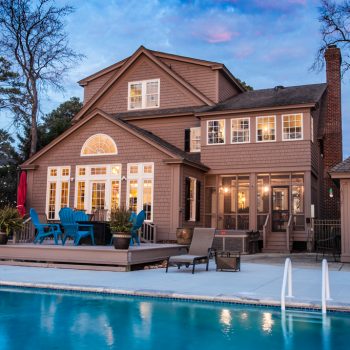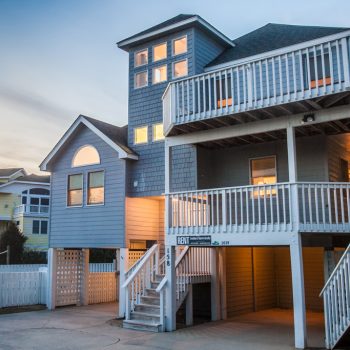
Duck is generally the better all-around choice for second-home buyers who value a connected town center, easier personal use, and a home that works well for weekend trips, shoulder-season stays, and eventual retirement. Corolla is generally the better choice for buyers who need more house, more bedrooms, greater privacy, or a rental strategy built around large family groups.
Duck offers a compact village setting, the Duck Boardwalk, Town Park, nearby dining, and an easier leave-the-car-behind ownership rhythm. Corolla offers a wider range of large homes, community types, pools, game rooms, and group-rental formats—but it often requires more active management of access, insurance, maintenance, storm preparation, vendors, and guest expectations.
Buyers often spend weeks comparing floor plans before realizing that long-term satisfaction usually comes down to neighborhood fit, beach access, driving patterns, and daily routine—not one extra bedroom or a larger deck.
Quick Decision Matrix
| If You Want… | Choose… | Why |
|---|---|---|
| Walk to restaurants, shops, and soundside public spaces | Duck | Its boardwalk, Town Park, trails, and village layout support easy on-foot access |
| A large home for extended family | Corolla | More large-home inventory, bedrooms, pools, and gathering space |
| Frequent weekend visits | Duck | Easier to arrive, park, and enjoy a short stay without extensive driving |
| Rental-income focus | Corolla | Larger group homes and amenity packages align with vacation-rental demand |
| Retirement or semi-retirement | Duck | Connected routines, public spaces, and town-centered ownership |
| Quiet and privacy | Corolla | More dispersed communities and potentially greater lot separation |
| Family reunions | Corolla | Large layouts, bunk rooms, pools, game rooms, and outdoor gathering areas |
| A hybrid owner-use property | Duck | Personal-use value remains strong even when rental income is secondary |
| Luxury estate scale | Corolla | More opportunities for large waterfront and amenity-rich homes |
| A lower-complexity second home | Duck | Smaller-scale ownership can be simpler than operating a large rental home |
The Core Difference
Duck and Corolla both offer beaches, vacation homes, rental demand, and the Outer Banks lifestyle. But they represent different ownership models.
Duck is a lifestyle-first purchase. Its town identity, public spaces, soundside boardwalk, restaurants, shops, and pedestrian-friendly layout can make the location part of the home’s value. Owners can use the boardwalk, walk to dinner, browse shops, or enjoy soundside sunsets without turning every outing into a drive.
Corolla is more often a property-strategy purchase. It offers a broader range of large homes, neighborhood types, private amenities, and vacation-rental opportunities. The home itself may become the destination: pool, game room, decks, outdoor kitchen, beach access, private community amenities, and enough space for multiple families.
The simplest way to think about the decision:
- Duck rewards buyers who want to use a place.
- Corolla rewards buyers who can operate a property effectively.
Duck at a Glance
Duck is usually the better fit for owners who want a second home that feels useful even when they are not hosting a large group or trying to maximize rental income.
Duck’s strongest ownership advantages include:
- Duck Boardwalk and Duck Town Park
- Soundside trails and public gathering spaces
- Restaurants, shops, and village amenities
- A compact town center
- Strong personal-use value for long weekends
- Better shoulder-season usability
- A connected environment for retirement or semi-retirement
- A more practical work-and-lifestyle routine for remote owners
Duck’s appeal is not simply that it has restaurants. The practical advantage is reduced friction. An owner can arrive Thursday evening, walk to dinner, spend Friday at the beach or on the boardwalk, and leave Sunday without relying on the car for every activity.
Who Should Buy in Duck?
Duck is often the stronger choice for:
- Couples and empty nesters
- Buyers planning frequent short visits
- Retirees and semi-retirees
- Lifestyle-led second-home owners
- Remote professionals who want a work-and-walk routine
- Buyers who value public spaces and town atmosphere
- Owners who may rent selectively but do not need rental income to justify the purchase
- Buyers who expect to use the home in October, November, spring, and holiday periods—not just July
Duck can also work for families, but it may be less suitable for buyers who need the largest possible home, multiple bunk rooms, a major pool complex, or a rental model dependent on large-group capacity.
What Duck Buyers Miss
The critical question is not only, “How close is this home to the beach?”
Ask: How does the home connect to the part of Duck you will actually use?
A house can appear close to town on a map but feel less convenient in practice because of:
- Highway 12 crossings
- Limited sidewalks or bike access
- Seasonal pedestrian traffic
- Parking limitations
- Distance to the boardwalk versus the beach
- The actual route to restaurants, shops, and soundside public spaces
- Whether a beach walkover works for children, coolers, and beach gear
Walk the route from each candidate home to the beach, Duck Boardwalk, Town Park, Waterfront Shops, Scarborough Faire, and preferred restaurants before treating “walkable” as a value driver.
Corolla at a Glance
Corolla is usually the better fit for buyers who want more house, more privacy, more space for extended family, or a rental strategy centered on large vacation groups.
Corolla’s strongest ownership advantages include:
- Larger homes and more large-group layouts
- Pools, elevators, game rooms, decks, and outdoor gathering areas
- Oceanfront, oceanside, soundside, and interior options
- More community variation
- Strong multi-generational family appeal
- A more natural fit for amenity-led vacation rentals
- Greater potential for privacy depending on neighborhood and parcel
- Access to recognizable local entities such as Historic Corolla Village, the Currituck Beach Lighthouse, Whalehead, Corolla Light, Ocean Sands, Pine Island, and Carova
Corolla is not one uniform market. Corolla Light, Whalehead, Ocean Sands, Pine Island, The Currituck Club, and the 4×4 area near Carova serve different buyer goals. A buyer should compare communities, access, amenities, HOA rules, beach routes, flood exposure, and operating needs rather than treating “Corolla” as one product.
Who Should Buy in Corolla?
Corolla is often the stronger choice for:
- Large or multi-generational families
- Rental-first buyers
- Investors comfortable with active operating costs
- Buyers who want a pool, elevator, game room, or private outdoor amenities
- Owners who expect to host several families at once
- Buyers seeking a larger waterfront or oceanside home
- Privacy-oriented buyers willing to drive more
- Buyers who want a self-contained vacation property
Corolla can be an excellent second-home market, but buyers should be prepared to treat the home as a business-supported asset. That means reviewing rent rolls, occupancy calendars, management agreements, pool and elevator maintenance, insurance, reserves, and guest expectations before relying on projected income.
What Corolla Buyers Miss
A listing’s community name is not enough.
Two Corolla homes with similar bedroom counts and list prices can have very different ownership profiles based on:
- Distance and route to beach access
- Flood zone and elevation
- Drainage during heavy rain
- Storm access and re-entry logistics
- HOA rules and amenity obligations
- Pool, elevator, HVAC, and deck condition
- Water and septic setup
- Rental history and management terms
- Parking capacity
- Location within the neighborhood
- Proximity to NC 12, shops, and services
The best Corolla property is not automatically the largest home or the one with the highest projected gross rent. It is the one whose condition, amenities, location, insurance profile, and operating burden fit your actual ownership plan.
Side-by-Side Comparison
| Category | Duck | Corolla |
|---|---|---|
| Overall lifestyle | Compact, town-centered, and connected | Destination-oriented, dispersed, and community-specific |
| Community feel | Defined town identity and public spaces | Wider range of neighborhood and property models |
| Walkability | Stronger overall | Usually more car-dependent |
| Restaurants and shops | Better access near the village core | Available but more dispersed and often drive-dependent |
| Privacy | Moderate, depending on lot and street | Often stronger potential due to larger geography and varied communities |
| Property size | More limited for very large homes | More large homes designed for groups |
| Rental positioning | Good for lifestyle-led and hybrid rentals | Stronger for large-group, amenity-led rental strategies |
| Personal use | Excellent for frequent short stays | Strong for owners who want a self-contained property experience |
| Shoulder-season use | Stronger town routine in October, November, spring, and holidays | Better for owners who enjoy privacy and home-based stays |
| Retirement fit | Excellent | Good, especially for buyers who prioritize privacy and space |
| Family-reunion fit | Good | Excellent |
| Remote-work fit | Strong for work-and-lifestyle routines | Viable, but more dependent on the exact property and internet service |
| Operational complexity | Moderate to high coastal ownership | Often higher for large, rental-oriented homes |
| Pool and elevator exposure | Property-specific | More common in large rental-home formats |
| Flood and storm review | Essential at the parcel level | Essential at the parcel level, including access and drainage |
| HOA review | Important | Important, particularly for community amenities and rental restrictions |
| Overall buyer fit | Lifestyle-led second-home owner | Space-led, family-led, and rental-led owner |
Drive-Time Reality
Duck and Corolla are both northern Outer Banks communities, but the additional driving becomes relevant when you arrive late on a Friday, leave after a weekend, need groceries, coordinate a vendor, or respond to storm notifications.
| Route | Approximate Distance | Ownership Meaning |
|---|---|---|
| Duck to Wright Memorial Bridge | About 12–15 miles | Reasonable for frequent weekend ownership, though summer traffic can extend travel time |
| Corolla to Wright Memorial Bridge | About 25–30 miles | The added distance becomes more noticeable during turnover traffic, storms, and short owner visits |
| Corolla to Duck | About 10–15 miles | Easy enough for planned dining or shopping, but not a casual on-foot relationship |
| Duck to Kitty Hawk services | Roughly 8–12 miles | More convenient access to larger grocery, healthcare, and service corridors |
| Corolla to Kitty Hawk services | Roughly 20–25 miles | Requires more advance planning for errands, appointments, vendors, and supplies |
| Corolla to Nags Head | Often 35–45 miles | Practical for a day trip, but not an everyday convenience relationship |
Actual drive times vary with season, weather, road work, Friday arrivals, Saturday turnover traffic, and incidents on NC 12. Corolla is not too far for the right owner; it simply asks for more deliberate planning. Duck offers more convenience once you arrive, while Corolla offers more space and property variety once you settle in.
Why Duck Can Win After Summer
Most buyers do not use their Outer Banks home only in July.
Many owners value:
- October and November weekends
- Spring breaks and shoulder-season stays
- Thanksgiving, Christmas, and New Year visits
- Remote-work weeks
- Long weekends after summer crowds fade
- Semi-retirement or eventual longer-term use
That is where Duck can become especially compelling. A centrally connected Duck home can still feel active on a quiet November weekend because owners can walk the boardwalk, enjoy the sound, meet friends for dinner, or spend time in town without needing to build a driving itinerary.
Corolla can also be excellent in the shoulder season. It is particularly appealing for owners who want quiet beach walks, family time, privacy, and a home with enough amenities to feel self-contained. The difference is that Corolla ownership usually depends more on the home itself, while Duck ownership gains value from the town around it.
Why Corolla Requires More Active Ownership
Corolla can be an outstanding second-home and rental market. But many large properties function more like small hospitality businesses than passive vacation homes.
A large Corolla home with a pool, elevator, several HVAC systems, decks, outdoor furniture, game room, and a full rental calendar needs an operating plan for:
- Pool inspections, service, safety checks, and equipment replacement
- Elevator servicing and maintenance
- HVAC inspections and corrosion-related upkeep
- Deck, railing, stair, roof, window, and siding maintenance
- Guest communication and turnover inspections
- Guest damage, housekeeping, linens, and supply replacement
- Furnishing upgrades to remain rental-competitive
- Landscaping, trash, pest control, and property checks
- Hurricane preparation and post-storm inspections
- Flood, wind, homeowners, and liability insurance renewals
- HOA covenants, parking, occupancy, pet, and amenity rules
- Reserve planning for expensive repairs and replacements
Higher gross rental income can be attractive, but it also brings more guest expectations, more systems, greater wear, and more vendor coordination. The right Corolla buyer is not necessarily a full-time investor; they simply need to be comfortable with an active ownership model.
Investment and Rentals
Corolla is generally the stronger candidate for buyers pursuing a rental-first strategy. Its larger homes, pools, game rooms, bunk rooms, outdoor kitchens, elevators, and gathering spaces can appeal to multi-family vacation groups.
However, gross rental income is not profit. A responsible rental model includes:
- Management fees
- Cleaning and linen costs
- Utilities
- Insurance
- Property taxes
- HOA dues
- Pool and landscaping service
- Repairs and maintenance
- Furnishing refreshes
- Guest damage
- Owner-use blocks
- Storm preparation
- Capital reserves
Duck can work well for a hybrid owner-user strategy. A buyer may value personal use first and use rental income to offset carrying costs. The strongest Duck rental properties tend to have a compelling location, beach access, good parking, clean design, and practical proximity to the boardwalk, soundside amenities, restaurants, or village core.
Rental income and personal use compete for the same calendar. The weeks an owner most wants to use the home may be the same weeks with the highest rental rates. Decide which matters most before buying.
Ownership Costs
The true cost of an Outer Banks property extends beyond the purchase price.
Budget for:
- Homeowners insurance
- Wind and hail coverage
- Flood insurance where required or appropriate
- Deductibles and replacement-cost assumptions
- HOA dues and special assessments
- Property taxes
- Roof, decks, railings, siding, windows, and exterior paint
- Salt-air corrosion on HVAC systems and exterior fixtures
- Pool, elevator, dock, bulkhead, septic, landscaping, and generator costs where applicable
- Cleaning, linens, guest support, and management for rental homes
- Storm preparation and post-storm inspections
- A long-term capital reserve
Duck may command more for lifestyle location. Corolla may cost more to operate once the buyer accounts for large-home systems, amenities, higher utility use, turnover wear, and rental infrastructure.
Neither town can be judged by a broad insurance estimate. Flood zone, elevation, roof, construction type, replacement cost, claims history, deductible structure, and wind exposure vary at the property level.
Flood, Storms, and Insurance
Flood and storm exposure are not town-level answers. A Duck home and a Corolla home may have vastly different risk profiles based on elevation, drainage, flood-zone designation, shoreline exposure, road access, roof condition, construction, and maintenance history.
Before removing contingencies, buyers should:
- Review FEMA flood-zone information.
- Request an elevation certificate if available.
- Obtain property-specific flood, wind, homeowners, and liability quotes.
- Review past insurance claims where available.
- Inspect drainage and observe the property after rain if possible.
- Understand road access and re-entry expectations after severe weather.
- Confirm how the property manager or caretaker handles storm preparation and post-storm inspections.
- Review the condition of roofs, decks, windows, siding, HVAC, and exterior systems.
Currituck County may issue official alerts and use phased re-entry procedures after storms. Remote owners should have a communication plan, vendor list, and clear inspection process before a named storm becomes an urgent issue.
Not Every Duck Home Beats Every Corolla Home
Town comparisons are useful starting points, not purchase decisions.
A well-located Corolla Light home with dependable amenities, simple beach access, good maintenance history, and a manageable operating profile may provide a better ownership experience than a disconnected Duck property with difficult access, limited parking, or poor real-world convenience.
Likewise, a centrally located Duck home may deliver more owner satisfaction than a much larger Corolla rental home if the buyer values weekends, walking to dinner, shoulder-season visits, and a lower-complexity lifestyle.
Compare individual homes using:
- Beach access
- Parking
- Elevation
- Flood zone
- Drainage
- Insurance
- HOA rules
- Rental history
- Management needs
- Internet service
- Condition of major systems
- Neighborhood setting
- Actual travel and walking patterns
The address matters more than the town label.
What Buyers Get Wrong
Buying a Vacation Week Instead of an Ownership Model
Do not buy based only on how the home feels during a perfect July week. Ask how you will use it in February, October, November, and during a rainy weekend.
Trusting Gross Rental Projections
Rental projections may not include all maintenance, insurance, management, owner-use, furnishing, and reserve costs. Use verified historical performance and conservative assumptions.
Ignoring Owner-Use Displacement
Your preferred July and August weeks may be the most valuable rental weeks. A hybrid owner must decide whether personal use or income is the priority.
Treating Insurance as a Closing Detail
Insurance can materially change the affordability of a coastal home. Obtain quotes early, for the exact property, before your decision becomes emotionally fixed.
Overlooking Pools and Elevators
Pools and elevators can support rental demand, but they require service, inspections, repairs, maintenance planning, and replacement reserves.
Choosing a Manager After Closing
For remote owners, a property manager or caretaker becomes part of the home’s operating system. Compare fees, owner-use policies, communication, maintenance authorization limits, marketing, reporting, and storm procedures before closing.
Assuming Every Corolla Home Is Similar
Corolla communities differ in access, lot layout, HOA rules, amenity structure, elevation, rental concentration, proximity to services, and operating complexity.
Assuming Every Duck Home Is Convenient
A Duck location may be near town in theory but less usable in practice because of road crossings, beach access routes, distance to the boardwalk, or parking limitations.
Buying Checklist
- Define whether personal use, rental income, or a balanced hybrid model is your primary objective.
- Compare specific neighborhoods and homes before comparing town-wide assumptions.
- Visit Duck and Corolla during the season and time of day you expect to use the home.
- In Duck, walk the routes to the beach, boardwalk, Town Park, restaurants, and soundside public spaces.
- In Corolla, drive the route to beach access, stores, service providers, and the community entrance during realistic traffic conditions.
- Review FEMA flood-zone data and request an elevation certificate if available.
- Obtain property-specific flood, wind, homeowners, and liability insurance quotes.
- Review HOA covenants, parking, occupancy, pet, renovation, rental, and design restrictions.
- Request historical rent rolls, booking calendars, operating costs, management agreements, and owner blocks for rental properties.
- Inspect pilings, roof, siding, decks, windows, HVAC, drainage, pool, elevator, septic, pest conditions, and waterfront infrastructure where applicable.
- Confirm broadband and mobile service at the address if remote work matters.
- Interview at least two property managers or caretakers before closing.
- Create a reserve plan before deciding what you can comfortably afford.
- Choose the home only when its lifestyle fit and operating profile agree.
FAQ
Is Duck or Corolla better for a second home?
Duck is generally better for lifestyle-led second-home ownership, frequent personal use, walkability, and future retirement potential. Corolla is generally better for buyers prioritizing larger homes, multi-generational use, privacy, or a rental-focused strategy.
Is Duck more walkable than Corolla?
Yes. Duck’s boardwalk, Town Park, trails, soundside public space, restaurants, and village pattern create a more connected pedestrian environment.
Which town has larger homes?
Corolla generally has more large homes designed for extended families and vacation rentals, often with pools, game rooms, elevators, large decks, and gathering areas.
Is Corolla better for vacation rentals?
Corolla is typically the stronger fit for rental-first buyers because large homes and private amenities align with group vacation demand. Buyers should still evaluate net income after management, insurance, maintenance, taxes, owner use, and capital reserves.
Can a Duck home still produce rental income?
Yes. Duck homes can perform well as rentals, especially when location, beach access, parking, design, and proximity to village amenities are strong. Duck is usually best approached as a personal-use asset supported by rental income rather than as a guaranteed income vehicle.
Which town is better for retirement?
Duck is often the stronger retirement choice because its town-centered routine, public spaces, restaurants, and boardwalk support everyday life outside of peak vacation periods.
Is Corolla too isolated?
It can feel isolated to buyers who want quick restaurant access, short weekend trips, and minimal driving. It can feel ideal to buyers who value space, privacy, large homes, beach time, and a self-contained property experience.
Do I need flood insurance in Duck or Corolla?
Requirements depend on the exact home’s flood zone, elevation, lender requirements, coverage structure, and risk profile. Review this during due diligence and obtain a quote for the exact property.
Are insurance costs the same throughout each town?
No. Insurance is property-specific and can vary based on elevation, flood zone, construction, replacement cost, claims history, roof condition, wind exposure, and deductible structure.
What should I inspect in an Outer Banks home?
Prioritize structural elevation, pilings, roof, siding, decks, railings, windows, HVAC, drainage, pest conditions, pool equipment, elevators, septic, docks, bulkheads, and other waterfront systems where relevant.
Are HOA rules important in Duck and Corolla?
Yes. Review parking, occupancy, rental, pet, renovation, design, amenity, and community-access restrictions before making an offer.
What is the biggest rental-investment risk?
Overestimating net income by overlooking management fees, insurance, maintenance, owner-use blocks, utilities, guest damage, furnishing upgrades, and capital reserves.
What should remote buyers do before closing?
Complete thorough inspections, verify insurance and utilities, confirm internet service, understand storm procedures, build a local vendor list, and establish a caretaker or property-management plan.
Final Recommendation
Choose Duck if your priority is a second home that feels easy to enjoy often: long weekends, shoulder-season breaks, remote-work weeks, dinners in town, soundside walks, and eventual retirement use.
Choose Corolla if you want a larger home, a more private setting, room for extended family, and a property that can support an amenity-rich vacation-rental strategy.
The best decision is not Duck or Corolla in the abstract. It is the individual home whose location, access, elevation, insurance, maintenance requirements, rental potential, and daily lifestyle match the way you plan to own it.