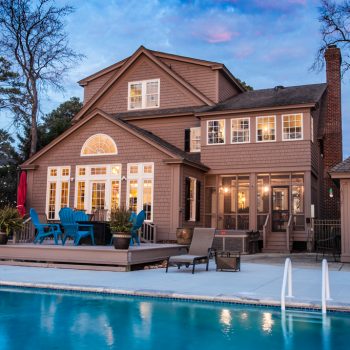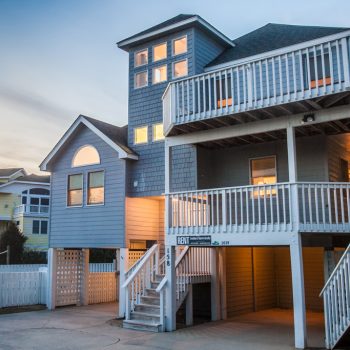
For most first-time Outer Banks buyers, a condo is the simpler entry point. It can offer a lower purchase price, shared exterior maintenance, amenities, and a lock-and-leave ownership model that works well for remote owners, retirees, couples, and buyers who want personal use with occasional rental income.
A house is usually the better choice for buyers who need bedrooms, privacy, parking, storage, private outdoor space, and the flexibility to support a larger family or a higher-capacity vacation-rental strategy. The core trade-off is shared, association-managed costs and rules versus individually controlled costs and responsibilities.
Quick Answer
| If You Want… | Better Choice | Why |
|---|---|---|
| First Outer Banks purchase | Condo | Lower direct maintenance burden and a more manageable remote-ownership model |
| Retirement or downsizing | Condo | Less exterior work; certain buildings offer elevators and shared amenities |
| A lock-and-leave second home | Condo | The association typically manages shared exteriors and common areas |
| A home for large family gatherings | House | More bedrooms, storage, parking, and flexible living space |
| Privacy and outdoor space | House | No shared walls and more control over decks, yards, pools, and amenities |
| Strong rental-income potential | House | Larger groups often pay for bedrooms, private pools, outdoor space, and parking |
| Fewer HOA restrictions | House | Neighborhood covenants may still apply, but there is usually less shared-building governance |
| A walkable beach getaway | Condo | Often available near beach access, restaurants, shops, and shared amenities |
| A future primary residence | House | Better long-term flexibility for storage, guests, parking, pets, and changing household needs |
| Easier remote management | Condo | A healthy association can handle exterior and common-area coordination |
The Main Difference
A condo and a house can offer similar beach access, views, and rental potential, but they create very different ownership structures.
With a condo, you own the unit and share responsibility for the building, common systems, amenities, and association governance through HOA dues and, potentially, special assessments. The association may manage roofing, exterior paint, landscaping, elevators, pools, common insurance, walkways, and shared building systems.
With a house, you own more of the operational burden. You control repairs, landscaping, exterior improvements, pool service, furnishings, parking, roof work, decks, HVAC, storm preparation, and vendor choices—subject to local rules and any neighborhood HOA.
The most accurate comparison is not “low maintenance versus high maintenance.” It is:
- Condo: Maintenance is shared, planned collectively, and governed by the association.
- House: Maintenance is individually controlled, individually funded, and directly managed by the owner.
Outer Banks Reality
Coastal maintenance is a major part of either ownership model.
Wind-driven salt exposure can accelerate corrosion in deck fasteners, railings, outdoor fixtures, HVAC components, window hardware, exterior paint, and roof-related systems. A house owner manages and funds those maintenance cycles directly. A condo owner typically pays for many of them collectively through HOA dues and, if reserves are inadequate, special assessments.
The Outer Banks also adds variables that buyers should price early:
- Flood-zone and elevation considerations
- Wind, homeowners, and flood insurance
- Storm preparation and post-storm inspections
- Parking and beach-access logistics
- Rental restrictions and management requirements
- Exterior corrosion and accelerated maintenance
- Pool, elevator, septic, dock, bulkhead, or landscaping costs where applicable
A condo can simplify these responsibilities, but it does not eliminate them. A house creates more control, but it also requires more systems, vendors, reserves, and decision-making.
Condo vs. House Comparison
| Category | Outer Banks Condo | Outer Banks House |
|---|---|---|
| Ownership structure | Individual unit ownership with shared building and common-area obligations | Individual ownership of home and usually land, subject to local and HOA rules |
| Purchase price | Often a lower entry point | Usually higher for comparable location, privacy, space, and rental capacity |
| HOA dues | Typically recurring and may cover exterior care, amenities, landscaping, master insurance, pools, or elevators | May have neighborhood dues, but generally lacks shared-building expenses |
| Special-assessment risk | Important; roofs, decks, elevators, pools, siding, or structural projects can trigger assessments | Owner funds major repairs directly and controls timing and scope |
| Exterior maintenance | Usually association-managed | Owner-managed: roof, decks, siding, pilings, paint, drainage, and landscaping |
| Interior maintenance | Owner responsibility | Owner responsibility |
| Insurance structure | Master policy plus unit-owner coverage; coverage gaps must be reviewed | Owner coordinates homeowners, wind, flood, liability, and relevant endorsements |
| Privacy | Lower; shared walls and common spaces are typical | Higher; no shared walls and more private space |
| Parking | Often assigned or limited | Usually more flexible with driveways and additional capacity |
| Storage | Often limited | Usually better for owner belongings and beach equipment |
| Amenities | May include pools, elevators, fitness, tennis, or beach access | Private amenities are possible but owner-funded and managed |
| Rental potential | Often strong for couples, small families, and value-focused guests | Often stronger for large families and multigenerational groups |
| Gross rental ceiling | Usually lower per booking | Usually higher with more bedrooms, parking, pools, and private outdoor space |
| Rental rules | Must verify caps, minimum stays, pets, guest rules, and parking | Must verify town and HOA rules; usually more property-level flexibility |
| Remote ownership | Easier only with a capable, adequately funded HOA | Requires reliable local vendors, inspections, and maintenance systems |
| Renovation flexibility | More limited by association rules and building structure | Greater control, though permits and covenants still apply |
| Best buyer fit | Simplicity, lower direct upkeep, amenities, and smaller-scale ownership | Space, privacy, lifestyle control, family use, and higher rental capacity |
Who Should Buy a Condo?
Choose a condo if you want an Outer Banks property that feels manageable from a distance.
A condo is often a strong fit for:
- Couples and smaller families
- First-time coastal buyers
- Retirees and downsizers
- Remote owners
- Buyers who want a lock-and-leave second home
- Owners who prefer shared amenities over private maintenance
- Buyers seeking beach access without managing an entire building exterior
- Personal-use owners who may rent selectively to offset carrying costs
A condo works best when you are comfortable with community governance. HOA dues are not simply an extra bill; they fund the systems, insurance, maintenance, and amenities that make the lock-and-leave model possible.
The important risk is the association itself. A well-managed building with reserves, transparent communication, appropriate insurance, and a credible capital plan can make ownership easier. A poorly funded association with deferred repairs can make a lower-priced unit far more expensive after closing.
Condo Buyer Profile
A couple from Virginia wants a two-bedroom Outer Banks property for long weekends, a few summer weeks, and occasional rentals. They value a pool, elevator access, beach proximity, restaurants, and not having to coordinate roof replacement, landscaping, exterior paint, or common-area storm repairs.
A condo may be the right fit—provided the association’s finances, insurance, rental rules, maintenance history, and pending projects support their plan.
Who Should Buy a House?
Choose a house if privacy, space, control, and rental capacity matter more than operational simplicity.
A house is often a stronger fit for:
- Large or multigenerational families
- Buyers expecting frequent visiting guests
- Vacation-rental investors
- Buyers who want a private pool or hot tub
- Owners who need multiple bedrooms and storage
- Buyers seeking a private yard, decks, driveway, or outdoor gathering space
- Luxury buyers who value customization and autonomy
- Future full-time residents
- Buyers who want to control furnishing, maintenance, parking, and improvement decisions
A house can create a better family and rental experience because it accommodates more people, gear, cars, and activities. In Corolla and Duck, parking capacity can directly affect rental appeal because large vacation groups may arrive in multiple vehicles.
The trade-off is that every system belongs to you. A house may not have a large condo assessment, but roofs, decks, railings, siding, pilings, HVAC, pools, elevators, storm preparation, landscaping, furnishings, and repair coordination all need a budget and a plan.
House Buyer Profile
A family wants a property they can use for several weeks a year, share with adult children, and rent during high-demand periods. They need six bedrooms, parking, storage for beach equipment, an outdoor dining area, and a private pool.
A house is likely the stronger fit. A large home in Corolla, Duck, Nags Head, or elsewhere on the Outer Banks may command higher gross summer revenue than a smaller condo, but it will also have larger insurance, furnishing, maintenance, pool, guest-turnover, and storm-response costs.
Local Condo Communities
Outer Banks condos differ significantly by location, amenities, HOA finances, master insurance, rental rules, parking, elevator access, construction condition, and assessment exposure. Buyers should evaluate the exact association and unit—not assume every condo offers the same ownership experience.
Examples of recognizable Outer Banks condo communities include:
| Community | Area | Buyer Appeal |
|---|---|---|
| Pirate’s Cove | Manteo | Marina-oriented setting, amenities, boating access, and a more residential waterfront environment |
| Bermuda Bay | Kill Devil Hills | Central access to beaches, services, restaurants, and community amenities |
| The Quay | Nags Head | Oceanfront condominium ownership and direct beach appeal |
| Admirals View | Kill Devil Hills | Oceanfront positioning near central Outer Banks services |
| Croatan Surf Club | Kill Devil Hills | Resort-style oceanfront setting and vacation-rental-oriented amenities |
| Duck and Corolla condo communities | Northern Beaches | Beach access, walkability in select locations, and lower-maintenance second-home potential |
The right community is the one with rules, reserves, insurance, parking, amenities, and rental policies that support your actual ownership plan.
Costs: What Buyers Miss
The right comparison is not a condo’s HOA fee versus a house’s lack of HOA fees. It is total annual ownership cost.
| Cost Category | Condo | House |
|---|---|---|
| Purchase price | Often lower entry point, though luxury oceanfront units can be costly | Often higher for comparable location, privacy, and capacity |
| HOA dues | Recurring; may include exterior care, amenities, landscaping, common insurance, pools, elevators, and building systems | May have neighborhood HOA dues, but no shared-building maintenance structure |
| Special assessments | Possible for roofs, siding, decks, elevators, pools, structural work, or insurance-related costs | No condo assessment, but owner pays for repairs directly |
| Exterior care | Mostly shared and association-managed | Entirely owner-managed |
| Insurance | Master policy plus unit-owner, liability, contents, loss-assessment, and possible flood coverage | Homeowners, wind, flood, liability, and property-specific endorsements |
| Rental costs | HOA dues, rental-rule compliance, furnishing, management, cleaning, and turnover | Furnishings, utilities, pool, elevator, landscaping, management, cleaning, and repairs |
| Storm response | Association handles shared systems; owner still monitors unit and insurance | Owner coordinates inspections, debris, repairs, vendors, and exterior systems |
| Long-term reserve | Interior systems, appliances, furnishings, and assessment exposure | Roof, decks, HVAC, siding, paint, pool, furnishings, exterior systems, and storm repairs |
A house that appears cheaper because it has no HOA dues can still cost more over five or ten years. A condo with lower dues can also prove costly if the association lacks adequate reserves for coastal building systems.
Condo HOA Due Diligence
A condo is only as low-maintenance as its association is healthy. Before the end of due diligence, request and review:
- Current budget and year-to-date financial statements
- Reserve balance and any reserve study
- Recent board and membership meeting minutes
- Master insurance declarations, deductibles, exclusions, and renewal information
- Special-assessment history
- Pending or discussed capital projects
- Roof, deck, siding, elevator, pool, structural, or drainage reports
- Rental, pet, parking, guest, and occupancy rules
- Litigation disclosures
- Management-company contact information
- Building and unit-level insurance claim history, where available
- Any planned increase in dues or master-policy deductible responsibility
Low HOA dues are not automatically a positive. They may reflect efficient management, or they may indicate that the association has deferred maintenance and insufficient reserves.
House Due Diligence
House ownership provides more control, but every major system becomes the owner’s responsibility.
In addition to a standard home inspection, Outer Banks house buyers should evaluate:
- Roof age, flashing, wind wear, and maintenance records
- Deck boards, railings, fasteners, stairs, and structural connections
- Pilings, foundation, lower-level enclosure, and water-intrusion evidence
- Siding, windows, doors, exterior paint, and corrosion
- HVAC age, maintenance history, and salt-air exposure
- Drainage, standing-water history, and flood-zone information
- Pool, hot tub, elevator, septic, generator, dock, or bulkhead systems where applicable
- Parking capacity for owners and rental guests
- Storage for beach equipment, owner belongings, and maintenance supplies
- Beach-access routes and guest logistics
- Storm-preparation expectations and available local vendors
A house can be manageable from a distance, but only when the buyer builds a dependable local support system before problems arise.
Rentals: Condo vs. House
A house usually has the higher gross revenue ceiling because it can accommodate larger groups and may include amenities guests will pay for: private pools, hot tubs, game rooms, multiple bedrooms, outdoor dining, decks, elevators, and driveway parking.
A condo can still be an effective vacation rental. It may appeal to couples, small families, off-season visitors, and guests seeking oceanfront access, a shared pool, elevator access, resort-style amenities, or proximity to restaurants and activities.
Condo Rental Strengths
- Lower entry cost in many locations
- Good fit for couples and smaller families
- Potentially lower furnishing and utility burden
- Shared pool, beach access, fitness, or elevator amenities
- Easier owner use for short stays
- Potential off-season demand when short stays are permitted
Condo Rental Risks
- HOA dues reduce net revenue
- Rental caps or minimum-stay rules may limit flexibility
- Guest parking may be limited
- Pet rules can affect marketability
- Special assessments can change cash flow
- Unit location, floor level, elevator access, noise, and views can materially affect performance
House Rental Strengths
- More bedrooms and higher group capacity
- Private pools, hot tubs, decks, game rooms, and outdoor living
- More parking and storage
- Stronger appeal for multigenerational vacation groups
- Greater furnishing and branding control
- Higher gross income potential in many cases
House Rental Risks
- Higher insurance, maintenance, furnishing, utility, and turnover costs
- More systems to repair and replace
- Greater storm-preparation responsibility
- Pool, elevator, septic, landscaping, and exterior maintenance obligations
- More guest wear and higher capital-reserve needs
A two-bedroom oceanfront condo in Kill Devil Hills may appeal to couples and small families who prioritize easy beach access. A six-bedroom home in Corolla with a private pool may command substantially higher weekly summer rates because it accommodates large family groups, but it also requires a more robust operating budget.
Insurance and Financing
Both condos and houses require property-specific insurance review. Flood, wind, homeowners, liability, deductibles, replacement cost, elevation, and construction all affect the final cost.
For condos, understand the difference between:
- The association’s master policy
- What the master policy covers
- Deductibles and whether owners share responsibility
- Unit-owner coverage
- Contents coverage
- Liability coverage
- Loss-assessment coverage
- Flood coverage requirements
- Coverage for improvements within the unit
For houses, price:
- Homeowners or hazard insurance
- Wind and hail coverage
- Flood insurance when required or appropriate
- Liability coverage
- Pool, dock, elevator, or waterfront endorsements where applicable
- Replacement-cost assumptions
- Deductible structure
- Storm-related access and repair planning
Financing can also differ. Lenders may review condo-project eligibility, association finances, insurance, owner-occupancy ratios, litigation, and other project-level factors. Buyers should discuss condo approval requirements early rather than waiting until appraisal or loan underwriting.
What Ownership Feels Like
Condo ownership often feels easier day to day. You arrive, unlock the unit, use the beach or shared amenities, and leave without personally arranging landscaping, roof repairs, pool service, or building-exterior maintenance.
That simplicity can be especially valuable for remote owners. But it works only when the HOA is responsive, well-funded, properly insured, and transparent.
House ownership feels more private and personal. You can host larger groups, create a dedicated storage plan, choose your own vendors, build an outdoor living environment, and shape the property around your family or rental goals.
After a storm or maintenance issue, though, you are the decision-maker and usually the coordinator. The ownership experience is more flexible—but more active.
Common Buyer Mistakes
Comparing Mortgage Payments Only
A lower condo purchase price can be offset by HOA dues and assessment exposure. A house without condo dues can require substantial direct spending on roofs, decks, HVAC, pools, exteriors, and storm repairs.
Assuming HOA Dues Cover Everything
A condo buyer must understand exactly what the master policy, HOA budget, reserves, and governing documents cover. “Exterior maintenance included” does not necessarily mean every building-related cost is covered without additional owner responsibility.
Ignoring Rental Rules
Never assume a condo permits the rental strategy you want. Confirm minimum stays, short-term rental rules, guest registration, parking, pet policies, rental caps, occupancy limits, and manager requirements in writing.
Buying a House Without a Reserve Plan
A large house with a pool, elevator, decks, roof, furnishings, and salt-air exposure needs a real capital reserve. Higher gross rent does not eliminate the need for planned repairs and replacements.
Underestimating Parking
Parking affects everyday use and rental appeal. This is especially important in locations where vacation groups arrive in multiple vehicles or where public parking is limited.
Treating Gross Rent as Profit
Model net performance after taxes, insurance, management, cleaning, linens, utilities, HOA dues, repairs, furnishings, pool care, exterior maintenance, storm costs, and owner-use blocks.
Buying the Lowest-Priced Condo
The least expensive unit may have a higher assessment risk, weaker views, limited parking, poor elevator access, more noise, rental limitations, or an underfunded association.
Assuming a House Means No Rules
Single-family homes may still be subject to HOA covenants, municipal regulations, rental rules, parking limits, pet restrictions, building codes, and permit requirements.
Buying Checklist
- Define the primary goal: personal use, rental income, future retirement, primary residence, or a hybrid model.
- Compare total annual carrying costs—not only purchase price and mortgage payment.
- Obtain property-specific flood, wind, homeowners, and liability insurance guidance early.
- For condos, request budgets, reserves, meeting minutes, master insurance, rental rules, assessments, and pending-project details.
- For houses, inspect roof, decks, pilings, siding, drainage, HVAC, pools, elevators, septic, docks, bulkheads, and pest conditions as applicable.
- Verify parking, storage, beach access, elevator access, and guest logistics.
- Confirm rental restrictions, minimum stays, pet policies, and management rules.
- Review flood zone, elevation certificate, storm-repair history, and drainage conditions.
- Request historical rent rolls, owner blocks, operating expenses, and management agreements for rental properties.
- Build a reserve for future repairs, replacements, and potential assessments.
- Visit during the season and time of day you expect to use the property.
- Confirm broadband and mobile service if remote work matters.
- Establish local maintenance, inspection, HVAC, pool, cleaning, storm-response, and property-management contacts before closing.
FAQ
Is a condo or house better for a first Outer Banks purchase?
A condo is usually the better first purchase if you want lower direct maintenance, a lock-and-leave model, and are comfortable with HOA rules and shared financial responsibility. A house is better when privacy, bedrooms, parking, storage, rental capacity, or customization justify a more hands-on ownership model.
Are Outer Banks condo HOA fees worth it?
They can be, if the association has transparent finances, adequate reserves, appropriate master insurance, and a credible plan for roofs, decks, elevators, pools, landscaping, and exterior systems.
Treat HOA dues as part of the property’s full operating model, not as an isolated monthly bill.
Do houses rent better than condos on the Outer Banks?
Houses often have higher gross revenue potential because they accommodate larger groups and may include private pools, parking, decks, outdoor space, and other amenities. Condos can rent well when location, views, shared amenities, rental rules, and price point align with smaller-group demand.
Is a condo easier to manage remotely?
Usually, if the association is well managed and financially healthy. The HOA can coordinate shared exterior and common-area issues, but owners still need to monitor dues, assessments, insurance, unit maintenance, rental operations, and association communications.
Are houses more expensive to insure than condos?
Often, but not always. House owners generally insure the entire structure, while condo owners need to understand the master policy and insure their unit-level exposure. Flood zone, elevation, construction, replacement cost, wind exposure, deductibles, and claims history matter more than property type alone.
What should I review before buying an Outer Banks condo?
Review the budget, reserves, master insurance, meeting minutes, special-assessment history, pending projects, rental rules, parking, pet rules, management quality, litigation disclosures, and any engineering or structural reports.
What should I inspect before buying an Outer Banks house?
Inspect the roof, decks, railings, fasteners, pilings, siding, windows, HVAC, drainage, flood history, pool, elevator, septic, dock, bulkhead, and all exterior systems relevant to the property.
Which is better for retirement?
A condo is often better for retirees who want less exterior work and a simpler ownership model. A house is better for retirees who want privacy, storage, visiting-family capacity, a private yard or pool, and more control over their surroundings.
Can a condo HOA prohibit short-term rentals?
Yes. An association can impose rental restrictions, minimum-stay rules, rental caps, guest requirements, pet restrictions, and other limitations. Confirm those rules before making an offer.
Final Recommendation
Choose a condo if you want a lower-maintenance Outer Banks property, a more manageable remote-ownership model, shared amenities, and a home that works well for shorter personal stays or smaller-scale rentals.
Choose a house if privacy, family use, bedrooms, parking, private amenities, storage, customization, and higher rental capacity matter more than operational simplicity.
The best decision is not based on whether a condo or house has the lower monthly payment. It is based on whether the property’s total ownership cost, insurance profile, maintenance needs, rental rules, HOA structure, and lifestyle fit match how you will actually use it.