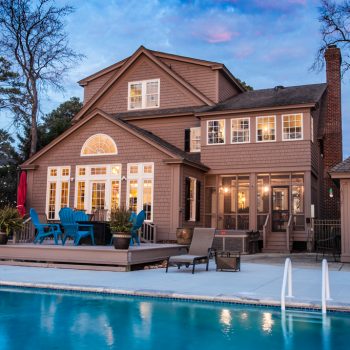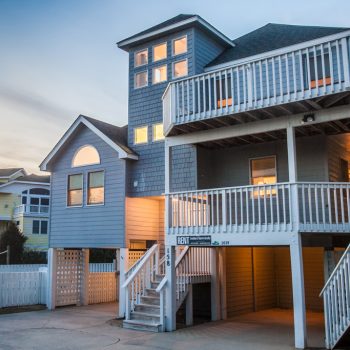
For many Outer Banks second-home buyers, an HOA community is the better choice when shared amenities, beach or sound access, neighborhood standards, and a more structured remote-ownership experience matter most. A non-HOA home is usually better for buyers who value rental flexibility, parking, renovation freedom, storage, privacy, and direct control over how the property is used and maintained.
The right choice is not about avoiding HOA dues at all costs or assuming every association is restrictive. It is about deciding whether the specific community’s access, amenities, rules, finances, and maintenance structure improve—or limit—the way you plan to own the property.
Updated July 2026. This guide is for general education, not legal, tax, lending, insurance, or association-governance advice. Review documents for the exact property and consult qualified professionals before removing contingencies.
HOA vs. Non-HOA at a Glance
| If this is your priority | Usually the stronger choice |
|---|---|
| Community pool, recreation, private access, and a defined neighborhood environment | HOA |
| Flexible rentals, parking, exterior changes, storage, and direct control | Non-HOA |
| Remote second-home ownership with useful, well-run shared infrastructure | HOA |
| Boat, trailer, equipment, renovation, or independent-use flexibility | Non-HOA |
| Vacation-rental income | Rental-friendly HOA or non-HOA; the actual rules decide it |
| Avoiding recurring association dues | Non-HOA, with direct maintenance reserves |
| Future retirement with amenity-supported routines | HOA, if the amenities and rules fit |
| Long-term primary residence with maximum autonomy | Non-HOA, in many cases |
Bottom line: A well-run HOA with meaningful beach access, useful amenities, rental-compatible rules, and adequate reserves can be a better purchase than a non-HOA house. A low-fee HOA with weak reserves, restrictive rental rules, or limited services may be worse value than independently owning a non-HOA property.
Executive Recommendation
Choose an HOA home if you value shared infrastructure enough to accept dues, community rules, architectural review, and some loss of individual control. This often works well for remote second-home buyers, families who will use pools or access amenities, retirees who prefer a more predictable neighborhood environment, and buyers who want a defined ownership structure.
Choose a non-HOA home if autonomy is more important than shared amenities. Non-HOA ownership can suit primary residents, renovation-minded buyers, boaters, rental investors, buyers needing flexible parking or storage, and owners who prefer to control their own maintenance decisions.
The key is to evaluate the exact property—not the label in the listing. A home in an amenity-rich Corolla community may have a very different ownership profile from a non-HOA home in Southern Shores, Kitty Hawk, Kill Devil Hills, Nags Head, or Hatteras Island.
What Is the Difference?
An HOA or POA is a private association that may collect dues, manage common property, maintain amenities, enforce covenants, and regulate certain property uses. Depending on the community, that can include pools, fitness facilities, private beach access, soundfront piers, landscaping, roads, parking, architectural standards, rental rules, and guest access.
A non-HOA property has no mandatory association governance or regular association dues. That usually provides more flexibility, but it also means there is no association-funded amenity system, no shared reserve for common infrastructure, and no board responsible for creating neighborhood standards.
Neither choice is automatically cheaper, easier, or safer. The real comparison is:
- Shared community value and collective financial risk
- Versus
- Independent control and direct ownership responsibility
Outer Banks HOA Reality
HOA value in the Outer Banks is highly community-specific. A buyer considering Corolla Light, Monteray Shores, The Currituck Club, Four Seasons, Ocean Sands, Whalehead, or another Corolla-area neighborhood may encounter very different combinations of dues, amenities, access rights, rental policies, parking rules, and architectural controls.
For example, Corolla Light is a large ocean-to-sound community with extensive resort-style amenities, while Monteray Shores is commonly associated with a clubhouse, pools, tennis, fitness facilities, and soundside access. Those amenities can be meaningful for personal use and guest demand, but buyers must still verify the rights, fees, guest privileges, and rules attached to the exact property.
The same principle applies south of Corolla. A buyer considering Southern Shores, Duck, Kitty Hawk, Kill Devil Hills, Nags Head, Rodanthe, Avon, Buxton, Frisco, or Hatteras Village should not assume every community has identical access, membership, rental, parking, or architectural requirements.
In Southern Shores, for instance, town beach-access parking permits are limited and require property ownership verification or an eligible long-term lease. That is an example of why beach access, parking, and guest use must be checked at the property and community level rather than inferred from a town name.
Local buyer insight: Buyers often focus on dues first. Experienced coastal due diligence begins with flood and wind costs, access rights, reserve strength, rental restrictions, guest parking, maintenance history, and planned capital work—because those factors shape the real ownership cost more than the annual fee alone.
Buyer Recommendations
| Buyer type | Usually stronger fit | Why |
|---|---|---|
| First-time coastal buyer | HOA | More structured ownership can make coastal responsibilities easier to understand |
| Remote second-home buyer | HOA | Shared amenities and common-area management can reduce coordination burden |
| Vacation-rental investor | Non-HOA or rental-friendly HOA | Rental rules, guest parking, amenity access, and minimum stays matter more than the label |
| Family using the home personally | HOA | Pools, private access, and recreation may improve regular use |
| Retiree | Depends on lifestyle | HOA can simplify shared amenities; non-HOA can offer greater privacy and control |
| Full-time resident | Often non-HOA | Stronger flexibility for parking, storage, outdoor use, and future changes |
| Luxury buyer | Depends on property goal | HOA can provide resort amenities; non-HOA can provide estate-style privacy |
| Boater | Depends on specific rights | Dock access, boat storage, trailer rules, and marina rights matter more than HOA status |
| Renovation buyer | Non-HOA | Fewer architectural approvals and more design flexibility, subject to permits and covenants |
| Downsizer | HOA | A healthy community can reduce some maintenance and coordination demands |
How Buyers Actually Choose
Most buyers do not eliminate an HOA or non-HOA property because one has a better pool or lower fee. The decision usually becomes clear after answering four practical questions:
- Will we use shared amenities enough to justify the dues?
- Do we need rental, parking, storage, boat, pet, or renovation flexibility?
- Would we rather manage our own contractors and maintenance, or participate in shared governance?
- Is the association financially healthy and operationally aligned with our intended use?
If a community pool, protected beach access, soundfront pier, maintained common areas, or recreation facilities will materially improve your ownership experience, an HOA may create real value.
If you need room for a boat, trailer, work vehicle, outdoor equipment, future pool, landscaping plan, renovation, flexible rentals, or independent decisions, a non-HOA property may be more suitable.
Community and Ownership Scenarios
| Buyer scenario | Likely fit | Why |
|---|---|---|
| A remote couple from Virginia who wants long weekends, a community pool, beach access, and less common-area coordination | Well-run HOA | Useful amenities and responsive management may reduce remote-ownership friction |
| A retired full-time resident who wants a workshop, garden, flexible parking, and direct control over exterior changes | Non-HOA | Autonomy may matter more than shared amenities |
| A vacation-rental buyer in Corolla or Nags Head | Rental-friendly HOA or non-HOA | Guest access, pool use, parking, occupancy, and minimum-stay rules determine the fit |
| A family buying for personal use and eventual retirement | Depends on actual amenity use | Private access or community recreation may justify dues if they will be used regularly |
| A boater wanting trailer, watercraft, or dock flexibility | Often non-HOA, but verify both | Storage, launch access, dock rights, and parking rules are property-specific |
| A buyer pursuing a major renovation or pool installation | Usually non-HOA | HOA design review can add approvals, timing, material restrictions, or limitations |
| A buyer drawn to Corolla Light-style resort amenities | HOA | Amenity packages can increase owner satisfaction and guest appeal when the rules support intended use |
Comprehensive Comparison
| Category | HOA or POA home | Non-HOA home |
|---|---|---|
| Dues | Required; varies by community and services | No mandatory association dues |
| Amenities | May include pools, fitness, tennis, piers, private access, or common areas | Usually home-specific or public-access dependent |
| Beach and sound access | May be community-controlled or amenity-based | Depends on public access, easements, or property location |
| Rental rules | May regulate rentals, guests, stays, parking, and amenities | Usually more flexible, but town, county, deed, and state rules still apply |
| Exterior changes | Often subject to architectural review | More flexible, subject to permits, zoning, easements, and covenants |
| Parking and storage | May be restricted | Usually more owner control |
| Community appearance | More standardized | More variable |
| Remote ownership | Can be easier with competent management | Requires stronger vendor, caretaker, or manager relationships |
| Maintenance responsibility | Shared systems and common areas funded collectively | Owner coordinates all private maintenance |
| Assessment risk | Possible if costs exceed reserves | No HOA assessment, but repairs are directly owner-funded |
| Resale appeal | Can attract amenity and structure-focused buyers | Can attract autonomy and flexibility-focused buyers |
| Overall trade-off | Shared infrastructure, shared governance | Individual control, individual responsibility |
When an HOA Wins
An HOA can be the better choice when the association provides something you will genuinely use.
A Corolla Light home may outperform a non-HOA alternative for a family that values a community-oriented resort environment, recreation, beach access, and shared amenities. A community such as Monteray Shores may be attractive for a buyer who values soundside recreation, a clubhouse, pool, tennis, or fitness amenities.
An HOA may also work well for a remote owner when:
- The association has clear communication and responsive management
- Amenities improve personal use or rental appeal
- The budget and reserves appear appropriate for community obligations
- Guest access is clearly defined
- Rental rules align with the intended ownership plan
- Architectural standards protect the neighborhood environment you value
- The buyer prefers collective management of common infrastructure
A rental-friendly HOA can also beat a non-HOA property when community amenities materially improve guest demand and guests can actually use them. A pool, beach access, fitness center, or soundside pier only adds investment value if the rules allow renters to use it and the operating costs remain sensible.
When Non-HOA Wins
A non-HOA home is often the stronger choice when flexibility matters more than collective amenities.
This may include buyers who want:
- Flexible short-term rental use, subject to local regulations
- Parking for multiple vehicles, trailers, boats, or equipment
- Outdoor storage, landscaping freedom, or project flexibility
- A future pool, fence, addition, or exterior redesign
- Direct control over vendors, materials, maintenance timing, and improvements
- Less exposure to board decisions, dues increases, and association approvals
- A property that can evolve with changing family, work, or retirement needs
A non-HOA home in Southern Shores, Kitty Hawk, Kill Devil Hills, Nags Head, or elsewhere can be the stronger fit for an owner who needs control over parking, storage, a phased renovation plan, or a highly personal ownership model.
But non-HOA does not mean unrestricted. Zoning, permits, flood regulations, septic limits, easements, deed covenants, parking rules, and rental regulations can still shape what an owner can build, rent, store, or change.
What Ownership Actually Feels Like
HOA ownership feels more structured. You may have defined pool hours, amenity procedures, parking rules, architectural guidelines, dues, rental restrictions, and common-area standards. That structure can feel reassuring when it matches your lifestyle.
Non-HOA ownership feels more self-directed. You can typically make more decisions about your property, but every vendor relationship, exterior repair, landscaping project, storm-preparation task, and maintenance decision belongs to you.
For remote owners, the right question is not “Which is lower maintenance?” It is:
Would I rather maintain my own property ecosystem, or participate in a shared governance system?
A strong HOA can reduce friction. A poorly managed HOA can create more delays, uncertainty, and cost exposure than independent ownership.
Rental and Investment Considerations
For vacation-rental buyers, rental rules are often more important than HOA dues.
Before making an offer, confirm:
- Whether short-term rentals are permitted
- Minimum-stay requirements
- Occupancy and parking restrictions
- Pet and noise rules
- Whether guests can use pools, beach access, fitness facilities, piers, clubhouses, or parking areas
- Whether guest passes, registration, wristbands, or extra fees apply
- Any rental-management, exterior-signage, or amenity-use requirements
- Whether proposed rules or board discussions may affect future rental use
A rental-friendly HOA can be an excellent guest product. A community pool, access system, pier, fitness center, or well-maintained common environment may help a property compete.
However, an HOA can undermine a rental strategy when rules restrict occupancy, parking, guest access, owner use, rental duration, or amenity use. Never rely on a listing description or an agent’s verbal summary alone. Review the governing documents and obtain written confirmation of the material rules.
Cost Considerations
HOA Cost Drivers
- Annual, quarterly, or monthly dues
- Transfer, document, resale-package, or administrative fees
- Special assessments
- Reserve funding and deferred-maintenance exposure
- Community insurance obligations
- Amenity, access, road, landscaping, or common-area costs
- The opportunity cost of paying for amenities you will rarely use
Non-HOA Cost Drivers
- No mandatory association dues
- Direct responsibility for maintenance, storm readiness, and repairs
- Pool, dock, landscaping, fencing, storage, parking, and exterior-improvement costs
- Possible private-road or shared-drive responsibilities
- Insurance, flood, wind, and hazard costs tied to the specific property
- The need to retain stronger reserves for large repairs and capital projects
The right comparison is not simply fees versus no fees. It is:
- Shared value and collective cost exposure
- Versus
- Individual freedom and direct ownership responsibility
Before You Make an Offer
Verify these items for the exact home, lot, unit, and development phase—not merely the community name:
- Current dues, payment schedule, transfer fees, and resale-package costs
- Declaration, bylaws, rules, architectural guidelines, and amendments
- Budget, financial statements, reserve study or reserve information, and meeting minutes
- Delinquencies, proposed or confirmed special assessments, capital projects, and insurance changes
- Pending litigation, disputes, violations, and major community concerns
- Flood-zone status, elevation information, flood coverage, wind coverage, and relevant association insurance
- Short-term rental permission, occupancy limits, minimum stays, parking rules, pet rules, and guest requirements
- Whether renters can use pools, fitness centers, beach access, piers, clubhouses, parking, or other amenities
- Boat, trailer, RV, golf-cart, storage, and EV-charging restrictions
- Architectural-review requirements for pools, fencing, sheds, roof changes, exterior colors, landscaping, docks, and shoreline work
- Beach-access rights, easements, road maintenance, private-road obligations, and storm procedures
- Whether membership, access rights, dues, and restrictions apply to the exact property
Buyer Mistakes
- Assuming HOA dues include everything. Confirm what is actually covered.
- Treating low dues as automatically positive. Low dues can coexist with weak reserves or deferred projects.
- Assuming rentals are allowed. Review the current rules before relying on income projections.
- Paying for amenities you will not use. A pool, gym, pier, or private access only has value if it fits your ownership pattern.
- Assuming non-HOA means unrestricted. Public rules and private restrictions can still apply.
- Ignoring guest access. Rental guests may not have the same amenity rights as owners.
- Overlooking parking and storage limits. These can affect trailers, boats, large families, rental guests, and resale appeal.
- Ignoring architectural review. Pools, fences, colors, roofing, landscaping, and exterior work may require approval.
- Treating special assessments as unlikely. Review reserves, projects, insurance, and assessment history.
- Relying on listing language. Recorded documents and current rules control.
- Assuming every lot in a community has identical rights. Phases, units, access rights, and membership structures can differ.
- Buying non-HOA without a maintenance plan. Freedom requires reserves, vendors, and storm readiness.
Regret Patterns
HOA Ownership Regret
HOA buyers often regret their choice when they value autonomy more than they expected. Frustration commonly comes from restrictive rental rules, parking limits, architectural approvals, rising dues, weak reserves, special assessments, or amenities that do not justify their cost.
The mismatch is most common when a buyer chose a community for its appearance but did not fully examine its governing documents or financial condition.
Non-HOA Ownership Regret
Non-HOA buyers often regret their choice when they wanted the polish and convenience of a planned community without the shared cost structure. They may underestimate the work involved in managing coastal maintenance, storm preparation, landscaping, vendors, insurance, and exterior projects independently.
The mismatch is most common when a buyer avoided dues but was not prepared to fund and coordinate everything the association would otherwise handle.
Decision Framework
Choose HOA if you value shared access, amenities, common-area maintenance, a more predictable neighborhood environment, and a structured remote-ownership model.
Choose non-HOA if you value rental flexibility, renovation freedom, personal parking, storage, privacy, boat or trailer use, and direct authority over property decisions.
Consider either if you are buying a hybrid second home. Compare HOA rules, guest amenity access, dues, reserves, special-assessment exposure, and management quality against the non-HOA home’s direct maintenance, insurance, access, and compliance requirements.
Avoid both if you are not prepared for either the predictable costs of community ownership or the unpredictable costs of independent coastal ownership.
FAQs
Should I avoid homes with HOA fees?
Not automatically. HOA fees can be worthwhile when they fund amenities, access, maintenance, or services you will actually use and when the association is financially healthy. Compare the fee with the value received, reserve strength, assessment exposure, and rules.
Can HOA dues make financing harder?
They can affect total monthly ownership cost and debt-to-income calculations. Association-related financial factors can also matter in some lending reviews. Discuss the exact property and association with your lender early.
Can HOA rules change after I buy?
Potentially. Rules, dues, assessments, amenity procedures, and budgets may change through the processes established in governing documents and applicable law. Review current documents, meeting minutes, proposed changes, and management communication before closing.
Can renters use HOA amenities?
It depends on the association. Confirm in writing whether guests can use pools, beach access, fitness centers, piers, clubhouses, parking areas, and other amenities. Ask about wristbands, registration, fees, seasonal restrictions, and owner-only rules.
Which Outer Banks HOAs are best for vacation rentals?
There is no universal best community. The right choice is an association that clearly supports the intended rental use and provides guest-usable amenities, workable parking, usable access, responsive management, adequate reserves, and rules that fit the property’s target guest.
Can an HOA stop me from installing a pool?
Possibly. Pools, fences, decks, drainage changes, landscaping, exterior lighting, and other improvements may require architectural approval. Review guidelines and ask about comparable approved projects before relying on an improvement plan.
Which Outer Banks neighborhoods have optional HOA membership?
Membership structures can vary by development phase, property type, and recorded documents. Never infer optional or mandatory membership from a listing description; verify the exact rights and obligations attached to the property.
Is HOA or non-HOA better for retirement?
HOA can be better for retirees who value amenities, shared maintenance, access, and a more predictable neighborhood environment. Non-HOA can be better for retirees who want privacy, parking flexibility, outdoor space, projects, and direct control.
Is HOA or non-HOA better for investors?
Non-HOA is often more flexible, but a rental-friendly HOA may create a better guest product when its amenities and access improve demand. Rental rules, guest access, parking, occupancy, dues, reserve strength, and management quality determine the answer.
What should I review before making an offer?
Review governing documents, rules, budget, reserve information, meeting minutes, assessments, insurance, litigation, rental rules, amenity rights, parking, architectural requirements, flood and wind planning, and any proposed capital projects affecting the exact property.