
Beach Nourishment and Erosion in the Outer Banks
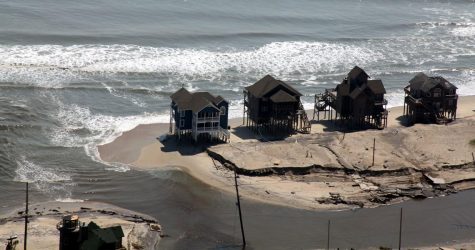 Beach nourishment and erosion are important parts of the ownership conversation in the Outer Banks because this is a dynamic barrier-island environment, not a fixed shoreline. For buyers, especially those looking at oceanfront or near-ocean property, it helps to understand that beach width, dune condition, storm impact, and shoreline change are all part of the long-term coastal picture.
It is not a promise about any specific property or future shoreline condition, but it can help buyers think more clearly about how nourishment projects and erosion risk fit into an Outer Banks real estate decision.
What beach nourishment means
Beach nourishment is the process of placing sand on an eroding shoreline to widen the beach and strengthen the coastal buffer. Outer Banks sources explain that sand may come from offshore borrow areas, inlets, or other dredged sources, and the purpose is to help protect beaches, dunes, infrastructure, and nearby property from ongoing erosion and storm impacts.
In the Outer Banks, nourishment is not a one-time fix. It is a maintenance strategy used because beaches continue to change over time as waves, currents, tides, wind, and storms move sand on and off the shoreline.
Why erosion matters in the Outer Banks
The Outer Banks are barrier islands, which means shoreline movement is part of the natural system. Public shoreline guidance in Dare County and Nags Head explains that erosion happens as waves, currents, tides, wind, and storms reshape the coast and that major storm events can accelerate those changes quickly.
For buyers, that means oceanfront value and oceanfront risk are always linked. A wide beach today is important, but it should not be treated as a permanent condition in exactly the same form over time.
What nourishment can and cannot do
Nourishment can help widen beaches, improve storm buffering, and protect coastal infrastructure and community access. Town and county project pages describe it as an important protective tool that supports homes, roads, utilities, dunes, estuaries, and the broader local economy.
At the same time, nourishment does not stop coastal change permanently. Nags Head’s public guidance says ongoing maintenance is required, and current Outer Banks project pages show that renourishment is something communities revisit over time rather than a once-and-done solution.
Why buyers should pay attention
If you are considering an oceanfront or near-ocean purchase, beach nourishment should be part of your research, but not your only filter. Buyers should also think about current beach condition, dune systems, flood exposure, storm history, maintenance needs, insurance questions, and how a property sits within the larger local shoreline pattern.
This is especially important because different parts of the Outer Banks can behave differently. Some areas receive repeated nourishment support, while others may face more visible erosion pressure or infrastructure vulnerability depending on location and recent storm patterns.
Current Outer Banks context
Current Dare County and town updates show that nourishment remains an active ongoing strategy across multiple Outer Banks communities. Dare County notes planned 2027 maintenance projects for Duck, Southern Shores, Kitty Hawk, Kill Devil Hills, and Nags Head, while 2026 projects have also been highlighted for Avon and Buxton on Hatteras Island.
That matters for buyers because it reinforces a key point: nourishment is part of the long-term coastal management framework in the Outer Banks. It is a sign that shoreline management is active, but it is not a guarantee that erosion risk disappears.
Questions oceanfront buyers should ask
If you are buying in an erosion-sensitive area, helpful questions often include:
- Has this stretch of shoreline been nourished recently?
- Are future nourishment or maintenance projects planned?
- What does the current beach and dune condition look like?
- How does this property relate to flood and insurance questions?
- Has the area experienced recent storm-related shoreline change?
- What kind of maintenance and resilience costs should be expected over time?
These questions do not replace inspections, flood-zone review, or insurance conversations. They simply help buyers move beyond a snapshot view of the beach and think more realistically about coastal ownership.
How this connects to the buying process
Beach nourishment and erosion are best treated as part of a wider due diligence process rather than a stand-alone issue. Buyers looking at oceanfront property should connect shoreline questions with inspections, flood-zone review, insurance planning, and town-level market context.
That is especially true in the Outer Banks, where the strongest buying decisions usually come from layering several kinds of information together rather than relying on a single photo, a single season, or a single beach-width impression.
Related pages
If you are researching coastal property in the OBX, these pages are the most useful next steps: